


Stealth legends, squad‑tactics, and live‑service juggernauts—these are the Clancy games that defined (and still dominate) modern action.
Tom Clancy games cover a lot of ground—stealth purism, squad‑based tactics, and MMO‑lite loot shooters—but the best entries share clarity, tension, and battles that reward planning over panic. This ranking focuses on celebrated, widely played releases from the last two decades, while making room for older standouts that still define their subseries. To weigh them, we looked at critical reception, sales or player adoption, long‑term support, and how well each game holds up in 2025’s crowded shooter landscape. If you’re new to the Clancy catalog, treat this as a curated starter kit; if you’re a veteran, consider it an invitation to revisit the highlights. For additional perspectives, we also surveyed recent roundups from major outlets when shaping this list.
10) Tom Clancy’s Splinter Cell: Conviction (2010)
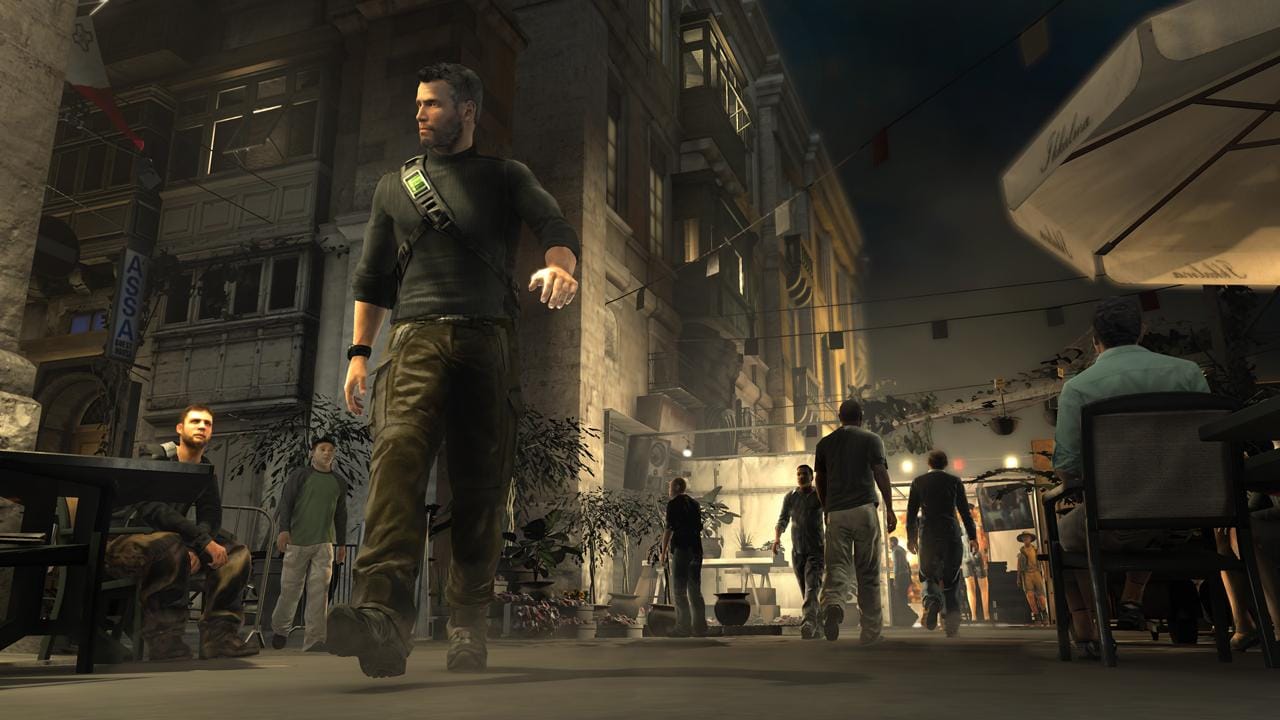
Sam Fisher’s most aggressive outing reframed the series around momentum. Conviction trades cumbersome suit-and-tie stealth for nimble stalking: you tag enemies, snap into cover, then unleash Mark & Execute to clear rooms in a heartbeat. The “Last Known Position” silhouette baits pursuers while you slip behind them, and the campaign supports this faster, meaner rhythm with compact sandboxes and gadgets that reward improvisation. A full, story-driven co‑op mode and denser Deniable Ops scenarios give the package real legs beyond the main story. It’s also one of the best entry points for newcomers—easier to read, punchier to play, and brisk without feeling slight. Critics agreed at the time, and players did too: it debuted as April 2010’s best‑seller in the U.S., and cleared nearly two million copies within a few months. If you bounced off earlier Splinter Cells for being methodical, Conviction finally lets you play the ghost as a prowling predator instead of a patient shadow. It still holds up.
9) Tom Clancy’s Rainbow Six: Vegas (2006)
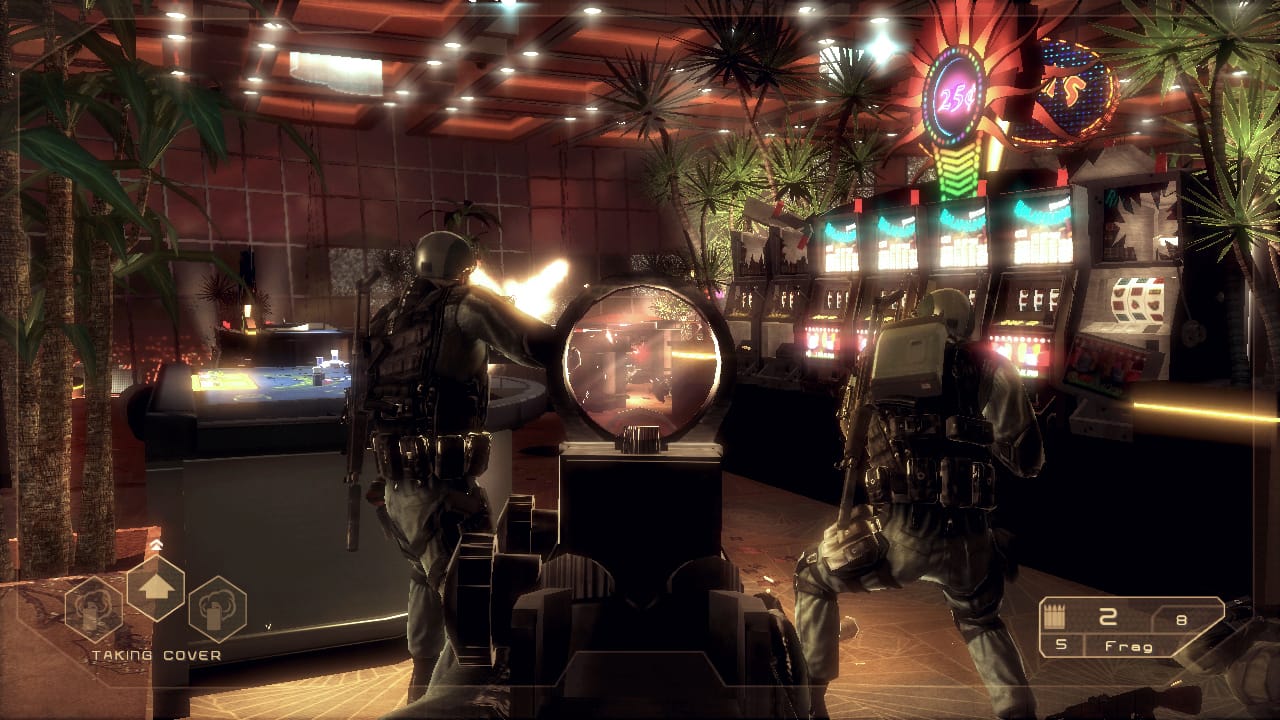
Vegas took Rainbow Six’s unforgiving, plan‑your‑breach DNA and gave it a cinematic jolt. Ubisoft Montreal’s tactical shooter moved the action to the neon canyons of the Strip, pairing methodical room‑clears with a then‑novel third‑person cover system that made leaning, blind‑firing, and peeking intuitive without sacrificing tension. Your squad’s snakes‑and‑ladders approach—flash, stack, rope in, sync shots—keeps firefights crisp and lethal, while a generous suite of rifles and gadgets lets you tailor every breach. The campaign’s casino shootouts still play, but Vegas truly endures as a co‑op and ‘Terrorist Hunt’ staple, where communication and map knowledge trump twitch aim. It was a critical darling, sweeping year‑end lists and grabbing the Academy of Interactive Arts & Sciences’ First‑Person Action Game of the Year, with outlets like IGN and GameSpot calling it a benchmark 360 shooter. If you want classic Rainbow pacing with modern comforts, Vegas remains a perfect middle road—tactical yet stylish, punishing yet fair, and endlessly replayable with friends on harder difficulties.
8) Tom Clancy’s Ghost Recon Wildlands (2017)
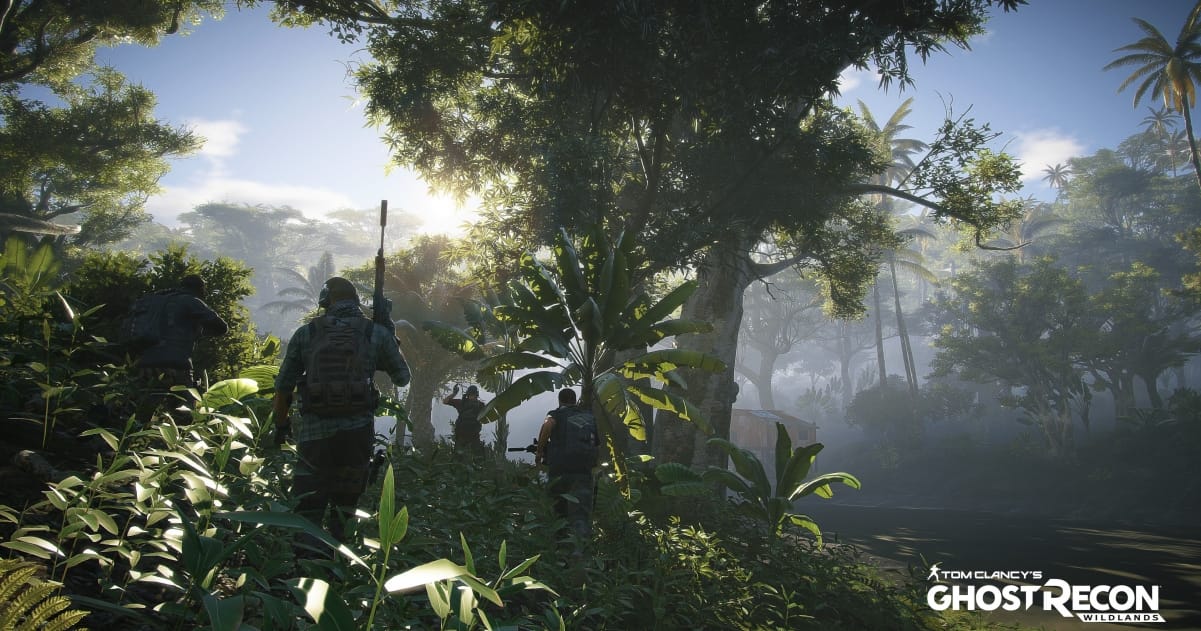
Wildlands blew the Ghost Recon formula wide open, trading linear missions for a sprawling, systemic Bolivia you can infiltrate from any angle. Built around four‑player co‑op, its best moments are improvised: one player marks targets with a drone while the others sync shots, plant C4, or slip out unseen in a stolen chopper. Every province is a small stealth‑shooter sandbox with its own cartel lieutenants, side objectives, gear, and intel loops, so progression feels like dismantling a criminal empire one careful raid at a time. It’s also one of Ubisoft’s biggest modern hits—topping March 2017’s U.S. charts and ultimately amassing over ten million players—proving there’s an audience for patient, tactical open worlds. With difficulty tweaked up and HUD pared back, Wildlands becomes cat‑and‑mouse: patrols react, alarms cascade across bases, and a sloppy extraction can torch a perfect plan. If you want Ghost Recon at its most free‑form and cooperative, this generous sandbox still delivers a steady stream of memorable missions.
7) Tom Clancy’s Ghost Recon (2001)
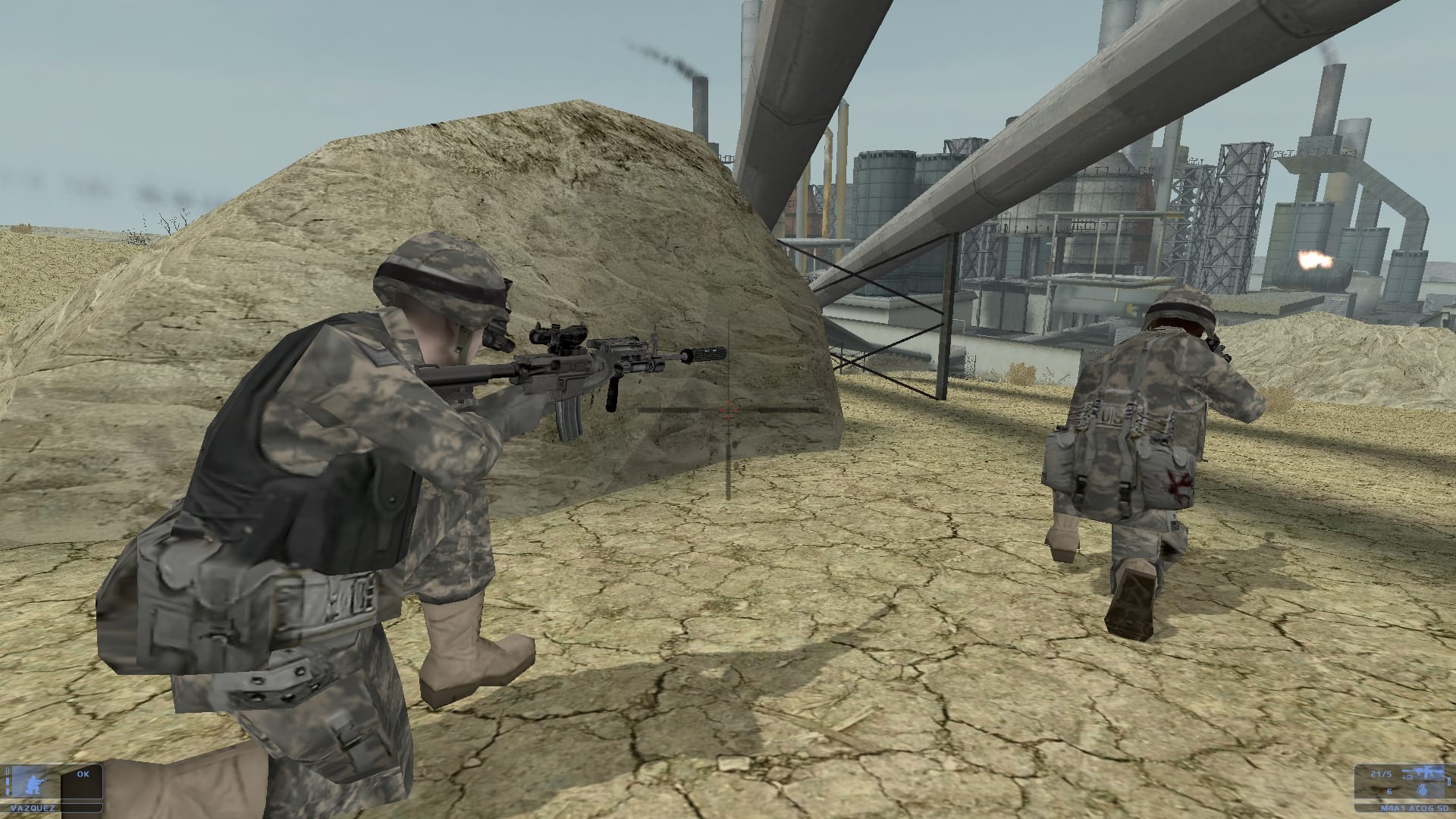
Before drones and dazzling HUDs, Ghost Recon built its reputation on restraint. Red Storm’s original leans into lethal, outdoor firefights where a single bullet ends a mission, line of sight is everything, and success comes from cautious spacing, clear fields of fire, and patient angles. You assemble a team of specialists, sweep through wind‑whipped woodlands and muddy villages, and feel the quiet victory of an extraction where no one saw you coming. It’s minimalist by today’s standards—no cluttered waypoints, no bullet‑sponge enemies—yet that clarity made it timeless and taught a generation of PC players that tactics are thrilling. The game was a sales success and won multiple Game of the Year nods, seeding a franchise that would later branch into futuristic tech and open worlds. Desert Siege and Island Thunder added campaigns, but the base game’s uncompromising design is still the draw. If you want to understand where the ‘Clancy’ style of realism crystallized, start here: methodical, punishing, and satisfying.
6) Tom Clancy’s Splinter Cell (2002)
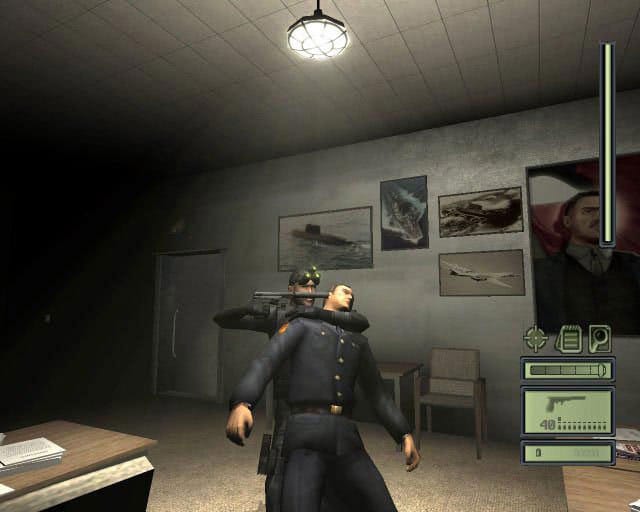
The original Splinter Cell arrived like a floodlight cutting through the stealth genre. Built in Unreal Engine 2 and obsessed with light and sound, Ubisoft Montreal’s debut has you watching shadows as intently as guards, managing noise, and treating every bulb, curtain, and grate as a tool. Sam Fisher’s athletic move‑set—split‑jumps, pipe climbs, back‑to‑wall shooting—remains tactile, and the iconic visor cleaves the darkness with a predator’s green calm. Levels are compact but layered, encouraging ghost‑clean runs as much as creative chaos when plans unravel. Released first as an Xbox exclusive before fanning out to PC and other consoles, it picked up a haul of awards and cemented the studio’s reputation for technical showpieces and tight design. Playing today still feels exacting rather than archaic: the rules are clear, gadgets purposeful, and objectives readable without clutter. If you want the template that made later entries sing, the 2002 original is a purist’s delight—challenging, elegant, and surprisingly flexible when you push it.
5) Tom Clancy’s Rainbow Six 3: Raven Shield (2003)
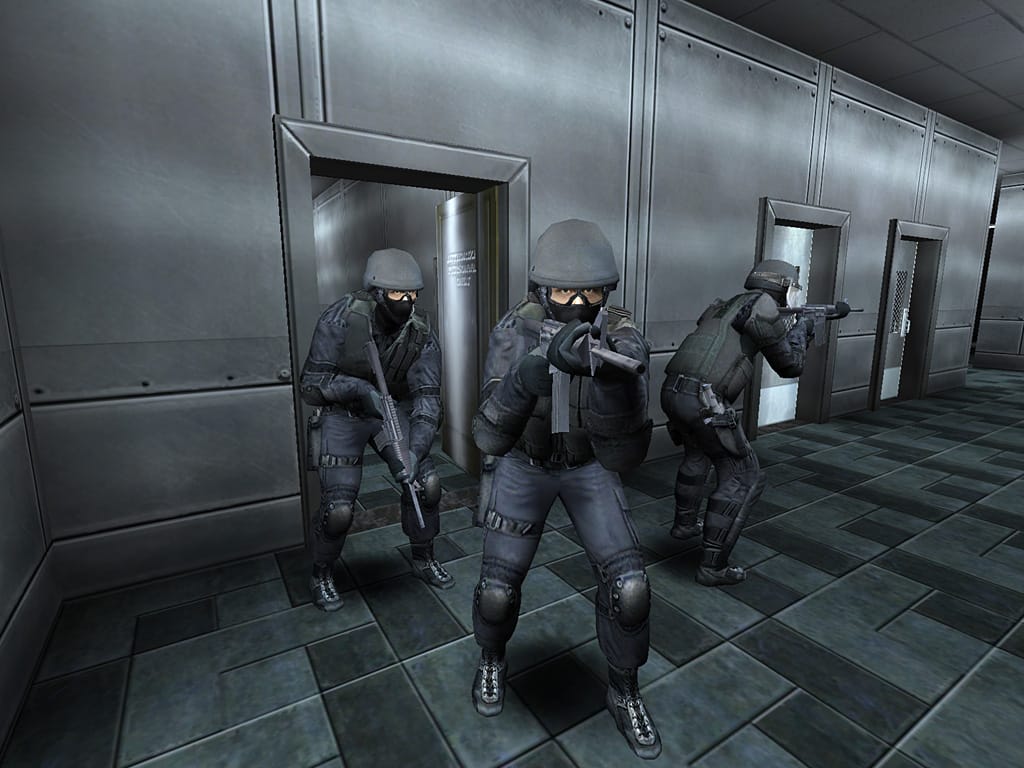
Raven Shield is the last great “classic” Rainbow before the series moved toward flashier presentation. On PC, it’s a meticulous, plan‑your‑routes tactical shooter built around lean lethality and no‑nonsense tools—door wedges, fiber‑optic cams, breaching charges, and ballistic realism that punishes impatience. You assemble squads in a pre‑mission planner, charting each fireteam’s waypoints and rules of engagement, then watch the plan unfold—or collapse—once bullets start flying. When it clicks, there’s nothing like stacking two teams on opposite doors, syncing flashes, and clearing a room in seconds without taking a hit. It reviewed strongly at launch and sold into the millions, becoming a pillar of early‑2000s PC shooters and a staple of LAN parties. Even in 2025, its mod scene and standalone expansions keep it playable, and its clear, readable UI remains a model for tactical design. If you crave grounded CQB where intel, angles, and discipline matter more than reflexes, Raven Shield still sets a formidable bar on its highest difficulties.
4) Tom Clancy’s Ghost Recon Advanced Warfighter (2006)
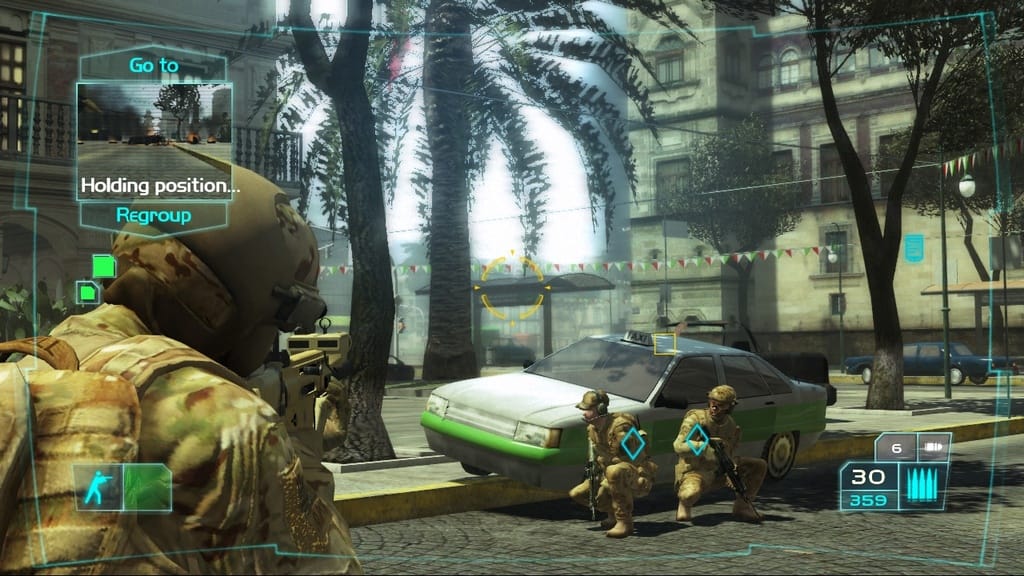
Advanced Warfighter was a turning point for Ghost Recon, fusing near‑future tech with nail‑biting tactics. Set amid a Mexico City crisis, the Xbox 360 version in particular introduced a fluid cover system and the Cross‑Com—an augmented‑reality feed that lets you see what drones, allies, and support units see, then issue synchronized orders. The result is a uniquely panoramic kind of command: you’re fighting, scouting, and orchestrating from behind the rifle, not a paused map. Different platforms diverged in mechanics, but the guiding vision—squad‑based realism sharpened by battlefield awareness—was consistent, and it felt thrillingly modern in 2006. Objectives escalate from VIP extractions to multi‑vector assaults where a single misread street can shred your team, inviting the careful, cover‑to‑cover advances that define the series. It’s also one of the era’s most decorated tactical shooters, and its sequel arrived a year later to refine the formula. Play it to see where the franchise’s embrace of gadgets and HUD‑driven teamwork really came into focus.
3) Tom Clancy’s The Division 2 (2019)
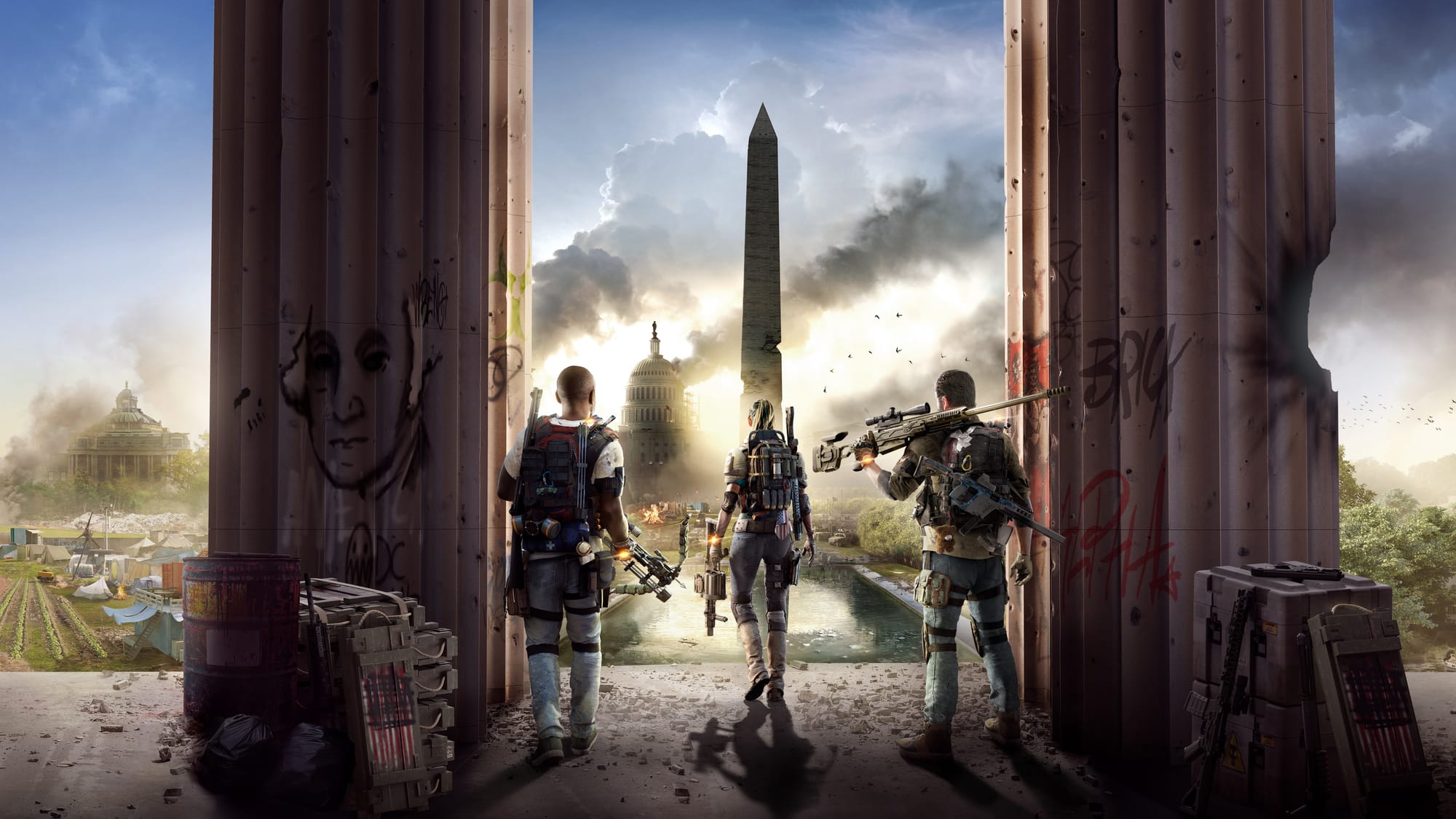
The Division 2 sharpened the loot‑shooter into a disciplined, cover‑based tactics game with RPG depth. Washington, D.C.’s toppled monuments provide sightlines and flanking routes that reward positioning and crowd control over face‑tanking, and the upgraded AI harasses you with rushers, snipers, and drones that force quick, team‑first adjustments. It launched with a meaty endgame—strongholds, invaded missions, and eight‑player raids—then found a second wind with Warlords of New York, which rebuilt gear systems, raised the level cap, and delivered a punchy Manhattan manhunt. Seasonal manhunts and global events keep the treadmill purposeful, and the rebalanced exotic builds make tinkering genuinely strategic rather than spreadsheet busywork. Crucially, it’s generous to co‑op groups: approachable on Normal, fierce on Legendary, with clear roles for crowd control, armor repair, and burst damage. If you’re after a Clancy game that marries gunplay clarity to min‑maxing satisfaction—and keeps growing through expansions like 2025’s Battle for Brooklyn—Massive’s sequel is the one still worth grinding with friends for months.
2) Tom Clancy’s Splinter Cell: Chaos Theory (2005)
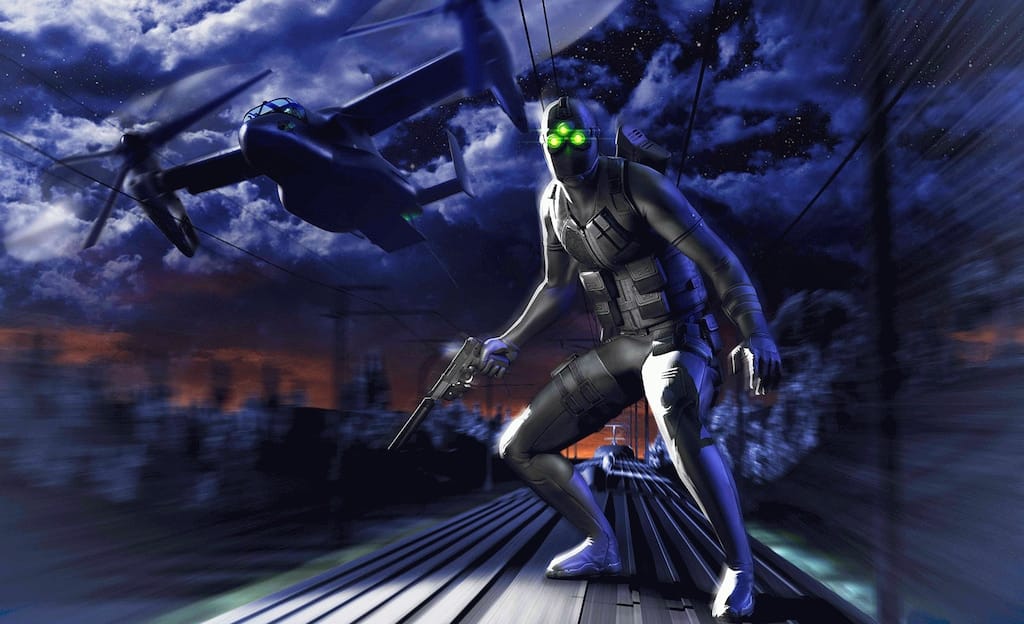
Chaos Theory is stealth at its most supple—every shadow a tool, every footstep a choice. Ubisoft Montreal rebuilt Splinter Cell’s stealth model around player intent: deeper light and sound meters, contextual takedowns, and levels that flex to pacifist ghost runs or surgical aggression. The missions are varied and memorable—Peru’s storm‑tossed lighthouse, the penthouse hack that turns into a hostage rescue—and Amon Tobin’s percussive soundtrack makes each crawl through darkness feel predatory. Then there’s the multiplayer: an asymmetry where lithe spies outthink heavily armed mercs, plus a co‑op campaign full of elastic co‑moves and hushed chaos. The result was universal praise and big sales, with Chaos Theory quickly selling into the millions and routinely appearing on “greatest of all time” lists. Two decades later it remains the genre’s high‑water mark: clear rules, crystalline feedback, and tools that reward creativity rather than rote solutions. If you play only one stealth game from the Clancy umbrella, make it this one—smart, stylish, endlessly replayable.
1) Tom Clancy’s Rainbow Six Siege (2015)
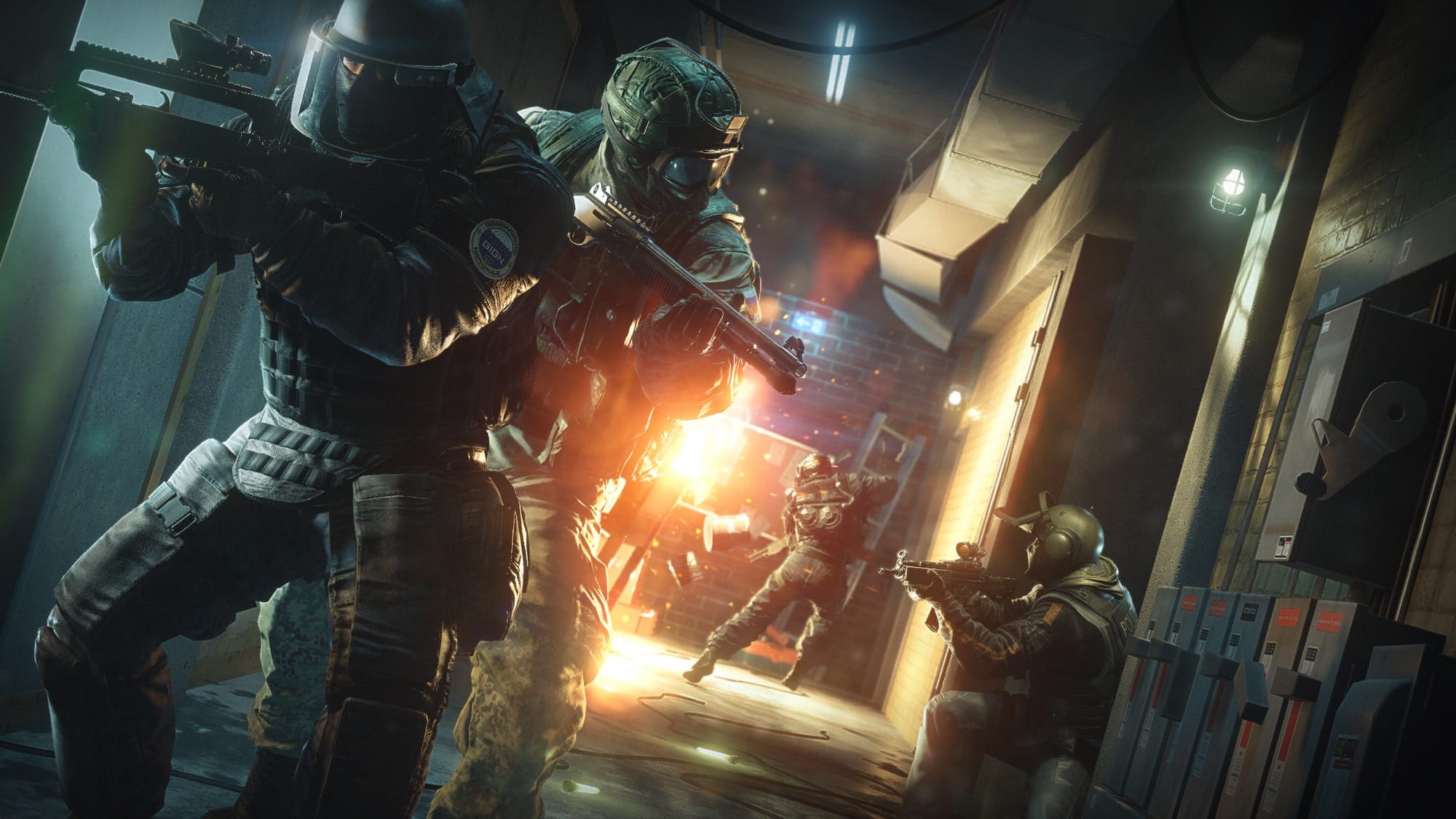
Nearly a decade on, Siege remains the definitive modern tactical shooter. Ubisoft Montreal distilled Rainbow into 5v5 attack‑versus‑defense standoffs where intel, utility, and map knowledge beat raw aim. Destructible walls and floors reshape sightlines on the fly, and the expanding operator roster turns each round into a puzzle: drone, breach, deny, rotate, then clutch. It’s the rare live‑service game that kept sharpening—balance passes, new maps, and reworks that preserve readability while raising the skill ceiling—and its esports scene taught millions how to think like defenders and entry fraggers. The result is remarkable longevity, with record Steam peaks persisting years after launch and a 2025 refresh (“Siege X”) that recommitted Ubisoft to frequent updates and stronger anti‑cheat. Best of all, Siege is as tense at low ranks as it is on stage: a single soft wall can decide a match, and communication turns five strangers into a coordinated battering ram. For pure, endlessly deep Clancy tactics, nothing tops it under pressure.
Alternate picks & notes
There are other good, popular Clancy titles—The Division (2016) kick‑started the looter‑shooter arc that its sequel perfected, while Rainbow Six: Vegas 2 refined the Vegas formula. If you’re exploring beyond this list, both are easy recommendations.


